

Why Flat Roofs Crack – And How Modern Liquid Roofing Systems Prevent Failure

Flat Roof Crack

Flat Roof Cracking Is a Design Problem, Not a Defect

Flat roof cracks rarely happen overnight — they develop slowly as roofing systems fight movement instead of managing it. As buildings face greater thermal stress, heavier rainfall, and faster refurbishment cycles, traditional rigid systems are increasingly exposed.

Understanding why flat roofs crack is the first step toward specifying systems that deliver long‑term performance. Modern liquid roofing systems and resilient roofing technology now offer proven solutions that work with building movement rather than against it.

The Real Causes of Flat Roof Cracks

Cracking is not random. It is almost always triggered by one or more of the following factors:

1. Thermal Expansion and Contraction

Flat roofs expand during warm periods and contract during colder conditions. Rigid membranes struggle to absorb this constant movement, leading to stress fractures over time.

Flexible liquid membrane roofing systems, by contrast, maintain elasticity across wide temperature ranges.

2. Substrate Movement

Timber decks, metal roofs, and aging felt systems all move differently. When a waterproofing layer lacks compatibility with the substrate beneath it, cracks form at stress points.

This is why the best roofing materials for flat roofs are those that adapt to substrate behaviour.

3. Trapped Moisture Beneath the Membrane

Moisture beneath rigid systems expands when heated, creating pressure that causes blistering and cracking. Seamless liquid roof systems reduce this risk by fully bonding to the substrate and eliminating joints.

The Real Causes of Flat Roof Cracks

Older flat roofing methods relied on thickness and rigidity for durability. While effective in the short term, these systems often fail prematurely under modern environmental pressures.

Rigid systems typically:

  • Crack at joints and transitions
  • Lose adhesion during freeze–thaw cycles
  • Struggle with refurbishment overlays

Modern resilient roofing technology replaces rigidity with controlled flexibility — a critical shift for long‑term waterproofing.

How Liquid Roofing Systems Prevent Cracking

Liquid roofing systems cure into seamless, monolithic membranes that are designed to bridge cracks rather than reflect them.

Key advantages include:

  • Joint‑free waterproofing
  • High elongation and crack‑bridging capability
  • Strong adhesion across multiple substrates
  •  Reduced long‑term maintenance risk

This makes liquid membrane roofing particularly effective for flat roof refurbishment and overlay projects.

The Importance of Compatibility in Flat Roof Waterproofing

No waterproofing membrane performs well if it is incompatible with the roof beneath it.

Modern liquid roofing systems can be tailored for:

  • Timber and OSB decks
  • Aged felt and asphalt roofs
  • Concrete with hairline cracking
  • Metal roofs with high thermal movement

Choosing the correct system ensures flexibility, adhesion, and durability work together.

When Cracks Are Most Likely to Appear

Cracks tend to develop at:

  • Upstands and penetrations
  • Changes in substrate
  • Roof perimeters
  • Areas with poor detailing

High‑performance liquid membrane roofing allows for reinforced detailing in these high‑risk zones.

Designing Crack Resistant Flat Roofs

A crack resistant flat roof is achieved through design, not luck.

Key principles include:

  • Allowing for movement
  • Selecting flexible waterproofing membranes
  • Ensuring substrate compatibility
  • Applying seamless systems with reinforced detailing

Want the Full Contractor Framework?

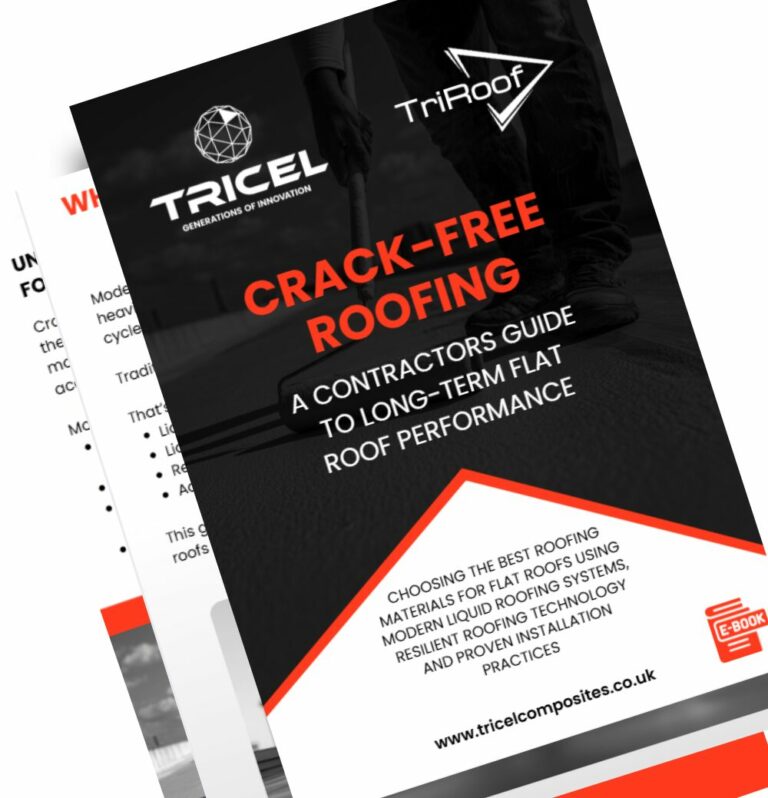
This article covers why flat roofs crack — but the complete system selection, overlay strategies, and installation best practices are detailed in our free ebook; Crack Free Roofing: A Contractor’s Guide to Long Term Flat Roof Performance’

Download the guide to learn how to design, specify, and install flat roofs that stay waterproof for the long term.

Disclaimer
This whitepaper is intended for general information and guidance on modern flat roofing solutions. It is not a substitute for professional engineering advice and should not be used as the sole basis for design, specification, or installation decisions. All roofing systems must be applied and approved by a suitably qualified professional in accordance with current standards, regulations, and project‑specific conditions. Tricel Composites accepts no responsibility or liability for any loss, damage, or consequences arising from reliance on the information contained in this document.
Crack-Free Roofing Ebook

Read More...