
What’s the Difference Between Carbon Fibre and Kevlar® ?

Carbon Fibre versus Kevlar

What’s the Difference Between Carbon Fibre and Kevlar® ?

Choosing between carbon fibre and Kevlar® isn’t about which material is “stronger” overall — it’s about how each one behaves under load, impact, and environmental conditions.

Both are lightweight, high-performance composite reinforcements used across aerospace, automotive, marine, and protective applications. However, their strength characteristics, durability, handling, and cost differ significantly.

This guide explains the key differences between carbon fibre and Kevlar®, where each material performs best, and how to choose the right one for your project.

Carbon Fibre vs Kevlar® — In Short


  • Choose carbon fibre for stiffness, compressive strength, and precision structural parts
  • Choose Kevlar® for impact resistance, abrasion protection, and toughness
  • Carbon fibre excels in compression and rigidity
  • Kevlar® excels in tension and impact resistance
  • Carbon fibre is easier to cut, drill, and finish
  • Kevlar® performs better in marine and high-abrasion environments

What is Carbon Fibre?

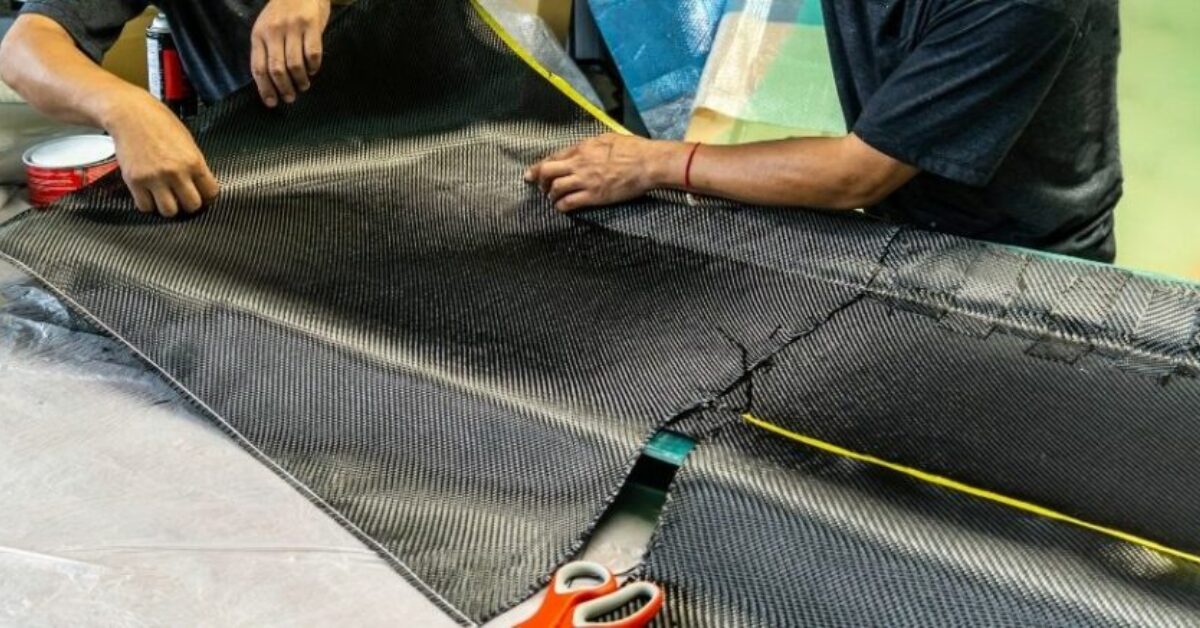
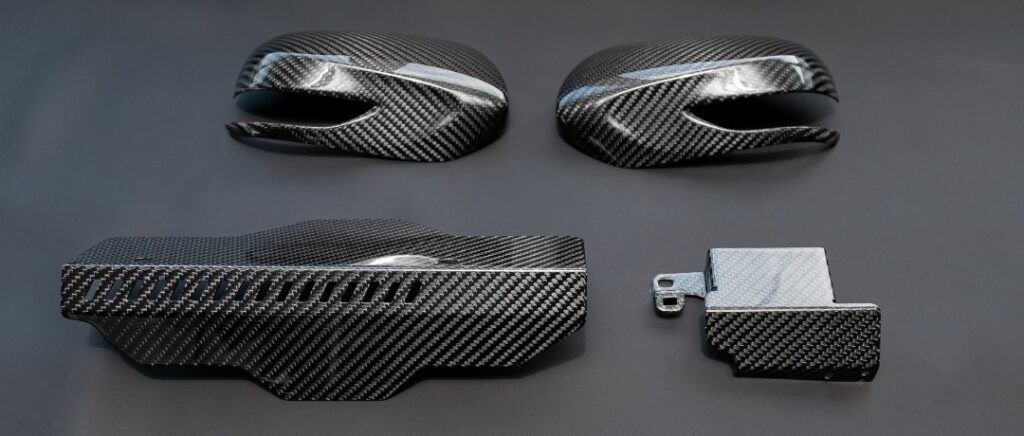
Carbon fibre is made from extremely thin strands of carbon atoms aligned in crystalline structures. These strands are bundled into yarns and woven into fabrics, which are then combined with resin systems to form high-strength composite materials.

Carbon fibre is valued for its outstanding strength-to-weight ratio, stiffness, and dimensional stability, making it a go-to reinforcement for load-bearing and precision-engineered components.

Carbon Fibre Weave Types

The weave pattern influences how carbon fibre behaves during lay-up and under load.

Twill Weave

The most recognisable carbon fibre pattern, featuring a diagonal aesthetic. Its relatively looser structure allows it to drape well over complex shapes, making it popular in both structural and cosmetic applications.

Plain Weave

A tight, over-under bidirectional weave that is stable and easy to handle. It provides uniform strength and is ideal for flat or slightly curved parts.

Satin Weave

A smoother, more flexible weave formed by multiple “over” passes followed by one “under.” While harder to handle, satin weaves are excellent for complex geometries and curved moulds.

Unidirectional Carbon Fibre

Fibres run in a single direction with minimal stitching to hold them in place. This format delivers maximum strength along one axis and is best used when load paths are well defined.

Advantages of Carbon Fibre

  • Exceptional strength-to-weight ratio.
  • High compressive strength and stiffness
  • Excellent chemical and heat resistance
  • Low thermal expansion
  • Easy to machine and finish once cured
Benefits of Carbon Fibre

Drawbacks of Carbon Fibre

  • Higher material and processing costs
  • Labour-intensive manufacturing
  • Brittle failure under extreme impact.
  • Limited recycling options
Carbon Fibre Downsides

What is Kevlar®?

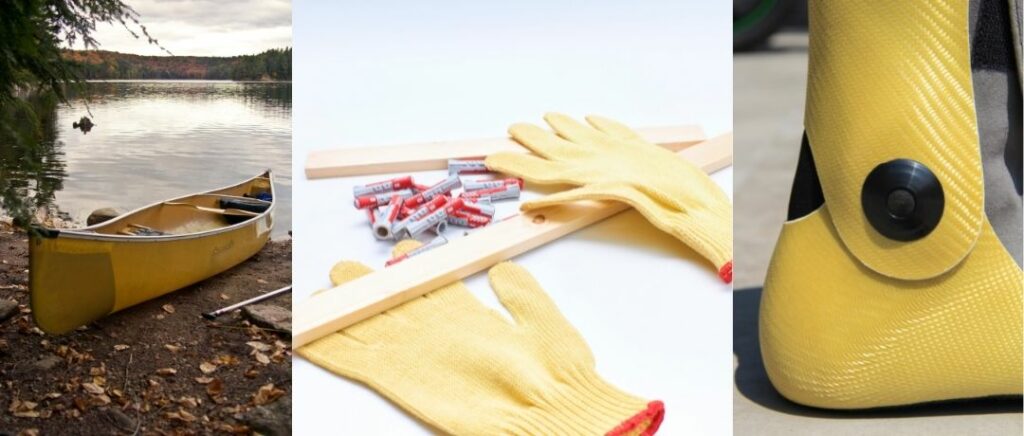
Kevlar® is an aramid fibre produced through a chemical condensation reaction. Its molecular chains align tightly and bond through strong hydrogen interactions, giving Kevlar® its exceptional tensile strength and toughness.

Unlike carbon fibre, Kevlar® does not fracture easily. Instead, it absorbs energy, making it ideal for impact-resistant and protective applications.

Advantages of Kevlar®


  • Extremely high tensile strength
  • Outstanding abrasion and impact resistance
  • Strong resistance to moisture and many chemicals
  • Maintains performance at high temperatures (up to 450°C)
  • Does not shatter or splinter on impact


Drawbacks of Kevlar®

  • Poor compressive strength
  • Difficult to cut, drill, or machine once laminated
  • Sensitive to UV exposure if not protected
  • Typically used as a hybrid material rather than alone


Carbon Fibre vs Kevlar: Quick Comparison

Property
Carbon Fibre
Kevlar
Tensile Strength
High
Very High
Compressive Strength
Excellent
Poor
Weight
Very Light
Light
Cost
Expensive
Moderate
Heat Resistance
High
Very High
Abrasion Resistance
Moderate
Excellent

Typical Applications

Carbon Fibre Applications

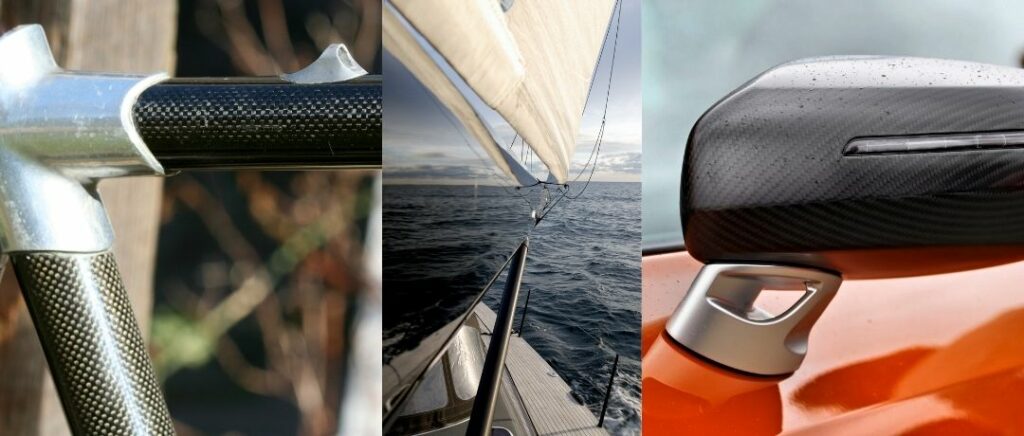
  • Structural aerospace components
  • Automotive chassis and panels
  • High-stiffness industrial parts
  • Sporting and performance equipment

Kevlar® Applications

  • Bulletproof and protective equipment
  • Marine reinforcements and hull impact zones
  • Abrasion-resistant panels
  • Energy-absorbing components

Frequently Asked Questions

Is Carbon Fibre Stronger than Kevlar®?

Kevlar has higher tensile strength, making it more resistant to stretching. However, carbon fibre offers superior compressive strength and stiffness, making it ideal for structural applications.

Which material is better for marine Applications?

Kevlar is preferred in marine environments due to its excellent abrasion resistance and ability to withstand extreme temperatures.

Can Carbon Fibre be recycled?

Carbon fibre recycling is limited and not widely available. Most carbon fibre waste is currently landfilled or incinerated.

Is Kevlar® more expensive than Carbon Fibre?

Kevlar is generally more affordable than carbon fibre, though prices vary depending on weave type and supplier.

Can Kevlar® be used in Structural Components?

Kevlar is not ideal for load-bearing structures due to its poor compressive strength. It’s best used in protective and impact-resistant applications.

Which Material is Right for Your Project?

If your project requires maximum stiffness, dimensional stability, and structural performance, carbon fibre is usually the best choice — albeit at a higher cost.

If your priority is impact resistance, abrasion protection, or energy absorption, Kevlar® offers clear advantages, particularly in marine and protective environments.

In many cases, the optimal solution is not one material or the other, but a hybrid composite that combines the strengths of both.

Need Help Choosing the Right Composite Reinforcement?

Selecting the correct material depends on load conditions, environment, manufacturability, and budget.

For expert guidance on carbon fibre, Kevlar®, or reinforcement materials speak to the Tricel Composites technical team or visit our Contact Us page to discuss your application in detail.

Read More...